
A rental property’s long-term performance depends on more than the purchase. Ongoing support for property investors means maintaining the asset, considering suitable upgrades, coordinating tenancy arrangements and keeping relevant Australian requirements in view. These elements work together to help protect the property and support a more settled tenancy.
It’s understandable to focus first on acquisition and finance: those decisions shape the investment. But the work continues after a tenant moves in. Maintenance needs attention, improvements should suit the property and its rental context, and clear communication can help address tenancy issues before they grow.
This article explains how property upkeep, upgrades and tenancy arrangements fit into an investment, and why careful tenant selection and respectful communication matter. It also considers local tenancy rules and how structured portfolio support can help investors keep the bigger picture in view.
Key Takeaways
- Assess prospective tenants carefully and build respectful communication from the start to support a more stable tenancy.
- Review investment advice against your goals, property condition, tenancy experience and portfolio performance, rather than relying on a single measure.
- Look for transparent recommendations and clear explanations of potential conflicts; pressure to act quickly or promises of high returns with little risk are warning signs.
- Keep maintenance, upgrades, tax records and tenancy obligations organised, and understand how the rules applying to your property affect ongoing decisions.
Tenant relationships and vetting
Tenant selection affects more than rent collection: it can shape the property’s care, cash flow and occupancy. Before agreeing to a tenancy, compare applicants using consistent criteria, such as rental history, references and evidence they can meet the proposed payments. A clear process keeps decisions grounded in relevant information rather than first impressions.
Vetting also means understanding the source of an applicant’s rental history and following up on relevant references. For example, ask previous rental providers about payment patterns, property care and communication, then consider those answers alongside the application. Apply the same criteria to all buyers of a tenancy opportunity, rather than changing standards in response to personal assumptions. Keep application information organised and handle it respectfully.
- Check fit: Consider whether the household’s needs align with the property’s layout, access and features.
- Set expectations: Explain how rent payment, maintenance requests and communication will work before the tenancy begins.
- Keep records: Retain clear notes about applications, agreed arrangements and follow-up conversations.
Once a tenant moves in, prompt, calm communication can help resolve small issues before they affect the relationship. If a tenant reports a leaking tap, for instance, acknowledge the report, agree on when you’ll provide an update and record what happens. Owners remain responsible for maintaining the property, responding to relevant issues and following applicable landlord and tenant laws.
Good tenant relationships don’t replace sound investment analysis, but they can support steadier occupancy and help protect the asset’s condition. Track payment patterns, maintenance requests and tenancy changes alongside cash flow and property expenses. These records help you assess whether rental income supports costs, lender commitments and plans to preserve equity or invest further. Tenancy coordination is most useful when it links day-to-day communication with broader investment objectives.
How can investors assess the performance of ongoing property investment advice?
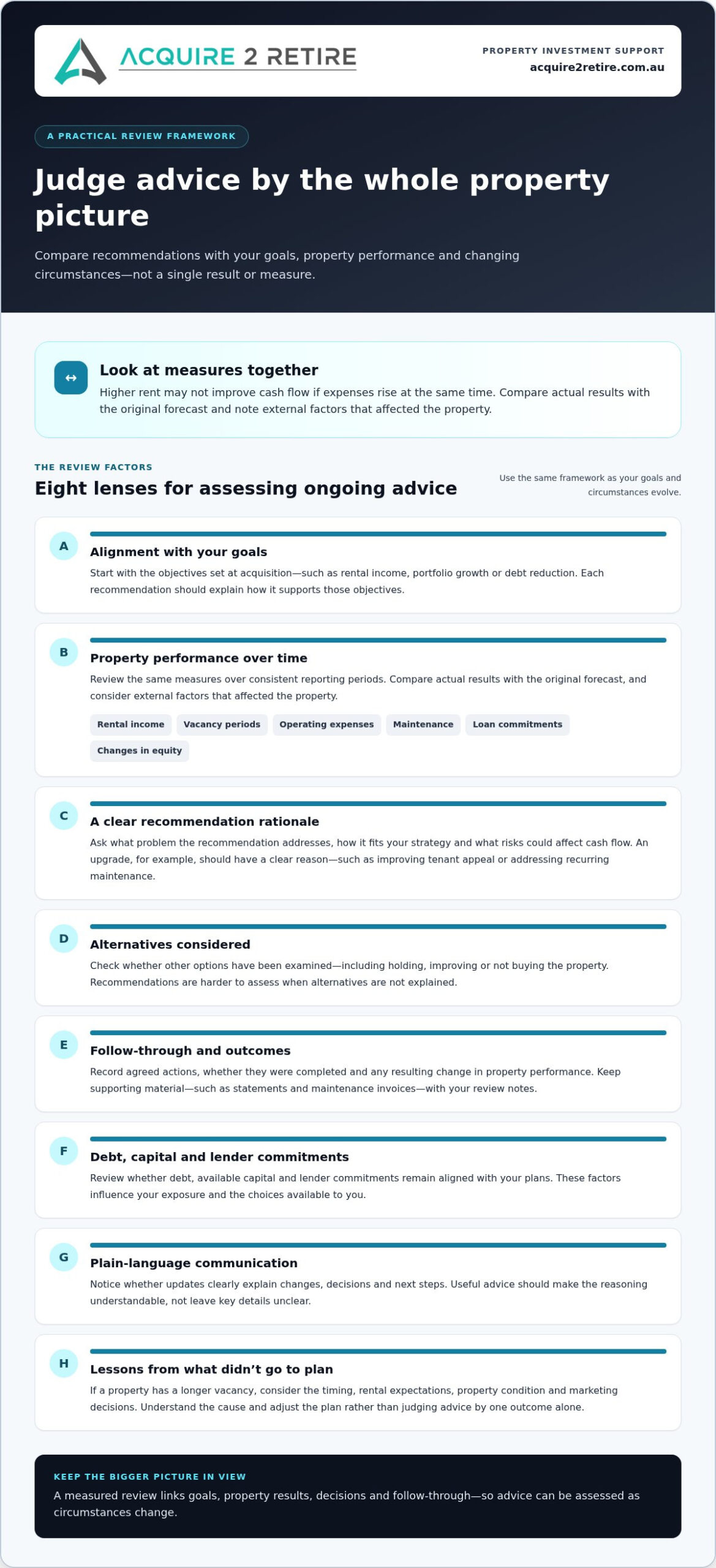
Assess advice by comparing its recommendations with your investment plan and the property’s performance. Start with the objectives set at acquisition, such as rental income, portfolio growth or debt reduction. Then check whether the advice explains how each recommendation supports those objectives. An upgrade, for example, should have a clear rationale, such as improving tenant appeal or addressing recurring maintenance. Recommendations without a clear link to your goals are harder to evaluate.
Review the same measures over consistent reporting periods: rental income, vacancy periods, operating expenses, maintenance, loan commitments and changes in equity. Consider how they interact. Higher rent, for example, may not improve cash flow if expenses rise at the same time. Compare actual results with the original forecast and note external factors that affected the property. This helps distinguish a sound decision from a favourable market movement.
- Test the reasoning: Ask what problem a recommendation addresses, what alternatives were considered and how it fits your strategy.
- Track follow-through: Record agreed actions, completion and the resulting change in property performance.
- Review exposure: Check whether debt, available capital and lender commitments remain aligned with your plans.
- Assess communication: Note whether updates explain changes, decisions and next steps in plain language.
A useful review also examines what didn’t go to plan. If a property has a longer vacancy, for instance, consider the timing, rental expectations, property condition and marketing decisions. The aim is to understand the cause and adjust the plan, rather than judge advice by one outcome alone. Keep supporting records, such as statements and maintenance invoices, with your review notes.
This measured approach helps investors see whether advice remains relevant as circumstances change. For a structured discussion of goals, financing and portfolio decisions, explore ongoing portfolio support.
What risks and conflicts of interest should investors watch for in property investment support?
Property advice can involve competing interests, especially when recommendations relate to a purchase, finance or another service. A conflict doesn’t automatically make advice unsuitable, but you should understand who benefits from each recommendation. For example, ask whether an adviser receives a referral payment for introducing a lender, buyer’s agent or other service. Clear explanations help you assess whether the recommendation fits your investment plan.
Be cautious if a proposal focuses on a promised return but gives little attention to vacancy, maintenance, borrowing costs or changes in rental income. Promises of high returns with little or no risk are a warning sign of investment fraud. Pressure to act immediately, fear of missing out and unsolicited opportunities are also warning signs. Fake testimonials may suggest success without giving you a reliable basis for judging an investment.
- Ask about incentives: Find out whether payments, referral arrangements or ownership interests could influence a recommendation.
- Request the rationale: Ask how the property, finance or strategy supports your goals and what risks could affect cash flow.
- Compare alternatives: Consider whether holding, improving or not buying the property has been examined.
- Review evidence: Treat testimonials as promotional material, and look for clear explanations of assumptions and downside risks.
For example, a property may seem attractive because of its projected rent, yet need substantial work before it can be tenanted. Ask how repairs, potential vacancy and loan commitments affect the overall assessment. A sound discussion makes the assumptions clear instead of relying on urgency or a single optimistic scenario.
Keep written records of recommendations, disclosures, questions and decisions. If advice changes, note what changed and why. This provides a useful record for later portfolio reviews and helps distinguish analysis from a sales claim. Ongoing support is more useful when recommendations are transparent, relevant to your circumstances and open to scrutiny, rather than based on pressure or promises of risk-free returns.
What tax, tenancy and compliance rules affect ongoing support for Australian property investors?
Australian rental property owners need to consider tax records, tenancy responsibilities, property upkeep and applicable laws together. Records of rental income, expenses and maintenance help show how the property performed and support accurate tax reporting. Organise rent statements, invoices and repair notes by property. For example, keep a repair receipt with a record of the issue and work completed so the expense is easier to understand later.
Tenancy responsibilities continue after a tenant moves in. Owners need to maintain the property, manage tenant relationships and comply with applicable landlord and tenant laws. Requirements depend on the property’s location, so keep local obligations in view when arranging repairs, communicating with tenants or considering an upgrade. Any improvement should account for the property’s condition and tenancy arrangements.
- Organise tax records: Keep rent statements, expense records and maintenance invoices together for each property.
- Record property care: Note reported issues, repair decisions and completed work, such as fixing a faulty appliance.
- Track tenancy matters: Retain clear records of communications and agreed arrangements with tenants.
- Review changes: Revisit upkeep and upgrade plans when the property’s condition or tenancy circumstances change.
These records connect day-to-day decisions with portfolio oversight. A maintenance log can reveal recurring issues, while income and expense records show how property costs affect cash flow. Together, they provide a clearer basis for considering whether an upgrade supports the investment plan or adds avoidable expense. Good documentation also makes it easier to explain what happened and why a decision was made.
Ongoing support for property investors can bring these tenancy and property-care considerations into broader portfolio planning without treating them as isolated tasks. If you’re reviewing how property upkeep, tenancy coordination and investment objectives fit together, discuss your ongoing portfolio strategy.
Acquire2Retire: Planning & Strategy
Acquire2Retire offers Planning & Strategy for Australian investors who want their property decisions to support a coherent wealth plan. Its guidance can connect portfolio goals with acquisition choices, tailored finance solutions, tenancy coordination and ongoing portfolio support. This can be useful when your circumstances shift, you’re considering another property, or you want to review whether existing assets still fit your direction.
For example, an investor weighing an upgrade can consider how it aligns with the property’s role, expected costs and tenancy needs before deciding what to do next. The focus is on structured advice across the investment journey, rather than a substitute for the owner’s responsibilities or ongoing property management.
If you’d like to discuss your investment plans, visit Acquire2Retire online.
Set a steady direction for your next property decision
Your next investment decision can clarify your overall plan, rather than become just another task. Consider what you want your portfolio to make possible, which trade-offs you’re comfortable with and how each new commitment fits your financial circumstances. Ongoing support for property investors keeps these questions in view as plans develop.
Acquire2Retire’s Planning & Strategy, Acquisition and Finance offerings can help connect portfolio direction with property and funding decisions. That can be useful when you’re weighing a purchase, reviewing your strategy or considering how a finance solution fits your broader objectives. The aim is to give your next decision a considered place within your investment journey.
To discuss how your property investment plans could move forward, contact Acquire2Retire about investor support. Take the next step at a pace that feels right for you.
Frequently Asked Questions
What ongoing support services do Australian property investment advisers offer?
Services vary, but may connect investment planning with acquisition, finance and portfolio reviews. Acquire2Retire’s support includes assessment, a tailored wealth plan, education and ongoing portfolio reviews every 12-18 months. Its finance service has access to over 30 lenders. For instance, an investor considering another purchase can review borrowing strategy alongside existing portfolio goals, rather than treating the new decision in isolation.
What is included in ongoing support after buying an investment property?
After a purchase, support may include reviewing portfolio performance, equity and future investment strategy. Acquire2Retire also facilitates tenancy coordination, while its ongoing support focuses on strategic guidance rather than day-to-day property management. For example, an investor could discuss how a change in circumstances affects their next acquisition plans. Clarify the scope of any support arrangement so you understand which decisions it covers and which responsibilities remain yours.
What are the steps for getting ongoing support for an Australian investment property?
Start by setting out your property, finance and portfolio goals, then organise the information that will make the discussion useful. A practical sequence is:
- Gather current loan, rental income and property expense records.
- Note any changes in your circumstances or investment priorities.
- Discuss how your current assets fit your wider wealth plan.
- Agree on the questions and decisions to revisit in future reviews.
This gives an adviser a clear starting point for tailored guidance.
Where can Australian property investors find independent ongoing support and complaints assistance?
For independent investment guidance, look for an adviser who is separate from the business or transaction being reviewed, and ask how recommendations are assessed. If you have a complaint, first identify whether it concerns advice, lending or tenancy, then follow the provider’s documented complaints process. Disclosure documents can identify the relevant independent dispute-resolution pathway. Keep correspondence and records of the issue together to support a clear account.