
A once-a-year review can reveal more than rent and property values at a glance. An annual property portfolio review compares each property’s actual performance with the returns projected when you invested, and considers lease renewals and how current rents compare with local market levels. It gives you a structured opportunity to assess what’s working and where a change may be worth considering.
It’s reasonable to wonder whether an annual check-in is enough, whether you’re better served by seeking advice only when a question arises, or whether ongoing oversight is more appropriate. This article explains what a review can cover, how it differs from ad-hoc advice and ongoing support, and what may be missed when you don’t review your portfolio. You’ll also see how planning, acquisition and finance advice can inform your next steps when your investment goals or circumstances change.
Key Takeaways
- Use a yearly review to turn property information into clear priorities, including decisions to monitor, adjust or investigate further.
- Choose between a scheduled review and ad-hoc advice by considering whether you need a consistent portfolio-wide view or help with a specific decision.
- Keep a record of major repairs and capital improvements so their impact can be considered alongside each property’s performance.
- Separate initial strategic advice from ongoing reviews: one helps shape your direction, while the other revisits how your portfolio is tracking over time.
What Happens During an Annual Review?
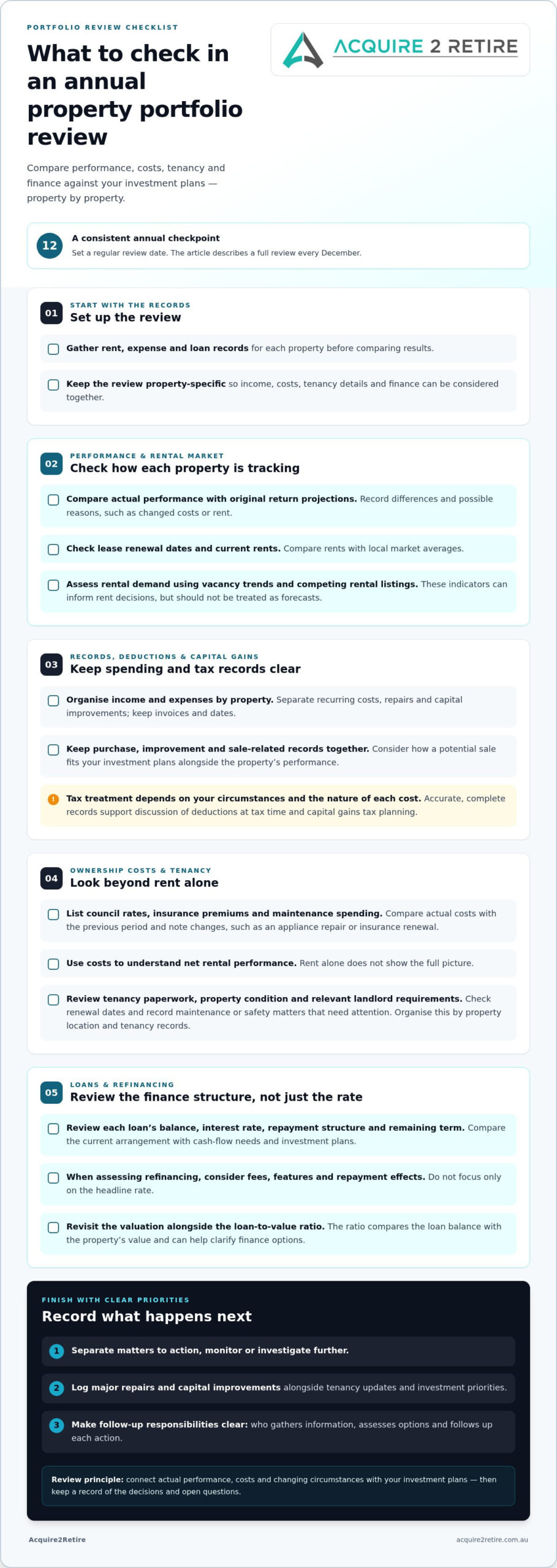
An annual property portfolio review compares each property’s actual performance with its projected returns. It also checks leases, rents, ownership costs and financing against your investment plans.
Review process and timing
Set a consistent annual review date, then gather rent, expense and loan records. A full review is conducted every December. Compare each property’s actual performance with its original return projections. Record differences and identify possible reasons, such as changed costs or rent.
Next, check lease renewal dates and compare current rents with local market averages. Assess rental demand using vacancy trends and competing rental listings. These indicators can inform rent decisions, but shouldn’t be treated as forecasts. Note which matters need action and which warrant monitoring.
Tax deductions and capital gains
Organise income and expense records by property before reviewing deductions. Separate recurring costs, repairs and capital improvements, and keep invoices and dates. These records clarify how spending relates to rental income and support a discussion of deductions at tax time.
For capital gains tax planning, keep purchase, improvement and sale-related records together. Consider how a potential sale fits your investment plans alongside the property’s performance. Tax treatment depends on your circumstances and the nature of each cost, so keep the review focused on accurate, complete records.
Property ownership costs
List council rates, insurance premiums and maintenance spending for each property. Compare actual costs with the previous period and note changes, such as an appliance repair or an insurance renewal. This gives you a clearer view of net rental performance than rent alone.
Also review tenancy paperwork, property condition and relevant state or territory landlord requirements. Check renewal dates and record maintenance or safety matters that need attention. Because local rules and circumstances affect which requirements apply, organise the review around the property’s location and tenancy records.
Loan and refinancing assessment
Review each loan’s balance, interest rate, repayment structure and remaining term. Compare the current arrangement with your cash-flow needs and investment plans. When assessing refinancing, consider fees, features and the effect of changing repayments, not just the headline rate.
Loan-to-value ratio compares the loan balance with the property’s value. Revisit the valuation and ratio together, then consider how they affect your finance options. A finance review can help clarify whether the current structure still supports your portfolio’s goals. Record questions and possible next steps.
Comparing no reviews, ad-hoc advice and ongoing oversight
Without a scheduled review, decisions can be driven by immediate pressures. You might fix a leaking tap while overlooking broader costs, or respond to a lease renewal without considering rent and investment plans together. For example, rising expenses can reduce rental income even as attention stays fixed on rent. This reactive approach means you have to spot issues and connect their effects across the portfolio.
Ad-hoc advice focuses on a specific decision. You might seek guidance before refinancing or responding to a proposed lease change. This can suit a clear, one-off question, especially when the rest of your portfolio remains on track. However, advice on one property or transaction won’t necessarily assess how that decision affects your wider investment strategy.
Ongoing oversight provides a consistent structure for monitoring priorities and following up on agreed actions. Rather than waiting for a problem, you can revisit performance, tenancy developments and financing as circumstances change. It helps maintain continuity, but the scope matters: ongoing portfolio support is distinct from ongoing property management, which handles day-to-day property operations.
Consider the adviser’s role and any transaction incentives. Advice connected to a purchase or finance transaction can involve different commercial incentives from advice focused on your broader portfolio. Understand how the adviser is remunerated and whether recommendations consider alternatives or focus on one transaction. Then assess whether the advice explains its reasoning, considers your goals and separates analysis from the transaction process.
Choose the approach that matches your decision-making needs. If you can manage routine monitoring but want a regular strategic checkpoint, an annual review offers structure. If a specific issue needs attention, ad-hoc advice is more targeted. If priorities require continuing follow-up, ongoing portfolio support can help keep actions connected to your investment direction.
How reviews fit into a long-term property investment partnership
A review connects past decisions with your next investment priorities and creates a consistent record for future conversations.
Reviews within the investment partnership
Use each review to track agreed actions, changing goals and portfolio decisions. Keep a log of major repairs and capital improvements completed during the year. For example, record a roof repair separately from routine maintenance. That history helps explain costs and property condition when you consider future plans.
Bring the log, tenancy updates and investment priorities to each discussion. Separate completed work from decisions that still need attention. If a property needs a major improvement, consider its purpose, timing and effect on your wider plans. This makes follow-up practical, with clear next steps rather than a general conversation.
A useful advisory relationship also makes responsibilities clear. Record who will gather information, assess options and follow up on each action. If circumstances change between reviews, note the trigger and its effect. A new investment goal, for instance, may change how you assess an existing property’s role.
Comparing investment performance
Compare property with shares, superannuation and other investments in light of your own objectives. Use a consistent timeframe and consider income, costs, growth and access to funds. Rent alone won’t show a property’s full contribution. Likewise, compare share income alongside changes in value and relevant costs.
Consider each asset’s role, not just its headline return. Property may provide rental income, while shares and superannuation have different structures and access conditions. Think about how concentrated your wealth is and whether income sources depend on similar market conditions. This adds useful context to performance comparisons.
Before changing your portfolio, write down the criteria for comparison. Include investment purpose, income needs, costs, risk and access to funds. Then review evidence across the same period. This disciplined approach helps distinguish a temporary movement from a change that may affect your long-term strategy.
Carry the comparison into your next review. Record which assets support your goals and which need closer attention. That gives future decisions a clear reference point, whether you’re considering a new investment or adjusting the balance between existing assets.
Initial strategic advisory compared with ongoing reviews
Initial strategic advice sets direction before major investment decisions. It can clarify your objectives, financial position and preferred approach to building a property portfolio. For example, someone weighing a first purchase can define priorities before assessing properties. Ongoing reviews serve a different purpose: they revisit the strategy as circumstances and portfolio performance change.
At the outset, bring together your goals, current commitments and assumptions about future investment. The discussion can identify which decisions need analysis, such as whether to acquire, hold or sell a property. A clear strategy records the reasoning behind those choices and gives later reviews a reference point, so each new opportunity isn’t treated as a standalone decision.
During ongoing reviews, compare your current circumstances with your starting position. A change in income, borrowing needs or investment goals may affect the original plan. Record what changed, why it matters, and whether it calls for action or monitoring. This creates a practical decision trail for the next conversation and keeps priorities connected.
Planning & Strategy can set or reshape your investment direction. Ongoing support can help you revisit decisions over time, while an annual review provides a regular checkpoint. Neither replaces the other: an initial plan establishes intent, and later reviews assess whether the approach remains aligned with it. A new property purchase, for instance, may prompt a fresh look at the wider strategy.
Before choosing, list the decision you need help with. A new investor may need a strategic starting point; an established investor may want to review progress against existing goals. If you’re ready to clarify your investment direction, explore property investment planning and strategy as a next step.
Acquire2Retire: Planning & Strategy
Acquire2Retire helps Australian property investors connect portfolio decisions with a considered wealth strategy. Its Planning & Strategy support can help clarify investment priorities and shape a path forward, while Acquisition and Finance support relate to purchase decisions and funding. Tenancy support can help investors consider tenancy needs within their broader plans.
Turn to strategic advice when your goals have changed, you’re considering another purchase, or review findings raise questions about your next move. For an established portfolio, ongoing support can help keep decisions aligned with your investment direction. The right next step depends on the decisions you need to make and the support that fits them.
To discuss your property investment plans, contact Acquire2Retire.
Turn your review into a considered next step
A review can clarify what deserves attention, but its value grows when you turn observations into deliberate decisions. Use your findings to identify the question that matters most now, whether that’s refining an investment goal, reconsidering a property’s role or preparing for a future purchase. A clear priority keeps the next step manageable.
Before your next annual property portfolio review, note what has changed in your circumstances and which decisions remain open. Keep the reasons behind each choice alongside the action taken, so you can understand the thinking later. This record can make future discussions more focused and help you respond thoughtfully as your plans evolve.
You don’t need to resolve every portfolio question at once. Start with the decision that most affects your direction, then consider what information will help you assess it. A steady, considered approach can make investment planning more organised and less reactive.
If you’d like to discuss your portfolio and possible next steps, contact Acquire2Retire. You can move forward at a pace that feels right for your investment plans.
Frequently Asked Questions
What is an annual property portfolio review in Australia?
It’s a structured assessment of how your investment properties support your financial goals over the year. An annual property portfolio review can help you decide which matters need attention, rather than treating every property decision separately. For example, someone considering a future purchase can assess how an existing property affects borrowing capacity, cash flow and overall portfolio balance.
What should an Australian property portfolio review include?
Include records that explain each property’s contribution and current position. Alongside rent and expenses, gather tenancy dates, loan statements, insurance documents, maintenance records and relevant valuation information. Note any changes in your investment goals, too. For example, a planned change in work or income may affect how much flexibility you want from property income and loan repayments.
How do you assess rental yield, cash flow and capital growth across a property portfolio?
Use consistent calculations and compare each property over the same period. Gross rental yield compares annual rent with the property’s value; cash flow considers rent against ownership expenses and loan outgoings. Capital growth compares values over time. For example, strong rent may coincide with higher costs, so reviewing income, expenses and value together gives a more useful picture than any single measure.
How do you review Australian investment property valuations and equity annually?
Compare a current estimate of each property’s value with its previous valuation, noting the date and basis used. Equity is the property’s estimated value less the outstanding loan balance. For example, a changed valuation may alter your apparent equity even when the loan balance has barely moved. Use estimates consistently and record assumptions so future comparisons remain meaningful.
What risks should Australian property investors review annually, including insurance, climate and interest-rate risks?
Review whether your insurance cover, policy exclusions and excess still suit the property and its circumstances. Consider exposure to local climate-related events and whether maintenance could reduce vulnerability. To assess interest-rate risk, examine how repayments and cash flow might respond to a change in lending costs. A written scenario for each property can show where you may need more financial flexibility.
What steps and checklist should you use for an annual property portfolio review in Australia?
Use a repeatable checklist: gather property, tenancy, insurance and loan records; update income, expenses, value and debt information; assess risks against your goals; then record decisions, responsible actions and follow-up dates. For example, if a lease ends before your next planned review, note it as an earlier checkpoint. Keep the completed checklist with supporting documents for future comparisons.