
A polished pitch isn’t the only thing that makes a property manager the right fit; the consistency of the team behind them matters just as much. Choosing a rental agent for an investment property means looking beyond the initial conversation to understand who will handle the day-to-day work and how the service will continue when your usual contact is unavailable.
It’s reasonable to want rent collected reliably, inspections handled properly and clear updates about your property. The challenge is knowing what to ask before choosing a rental agent for investment property. This guide explains how to assess the services offered, rent collection and inspection processes, local experience, portfolio size and team continuity. Comparing these practical details can help you choose an arrangement that suits your property and the level of involvement you want.
Key Takeaways
- Clarify which tasks the agent handles throughout a tenancy, and how their experience supports tenant selection and day-to-day decisions.
- Understand how rent payments are tracked and what inspection reports include so you can stay informed about your property’s condition.
- Consider the manager’s local knowledge alongside the size and spread of their portfolio when assessing their capacity.
- Ask how the team shares information and covers for an absent manager, helping maintain consistent communication and service.
1. Why should you get a real estate agent to manage your property?
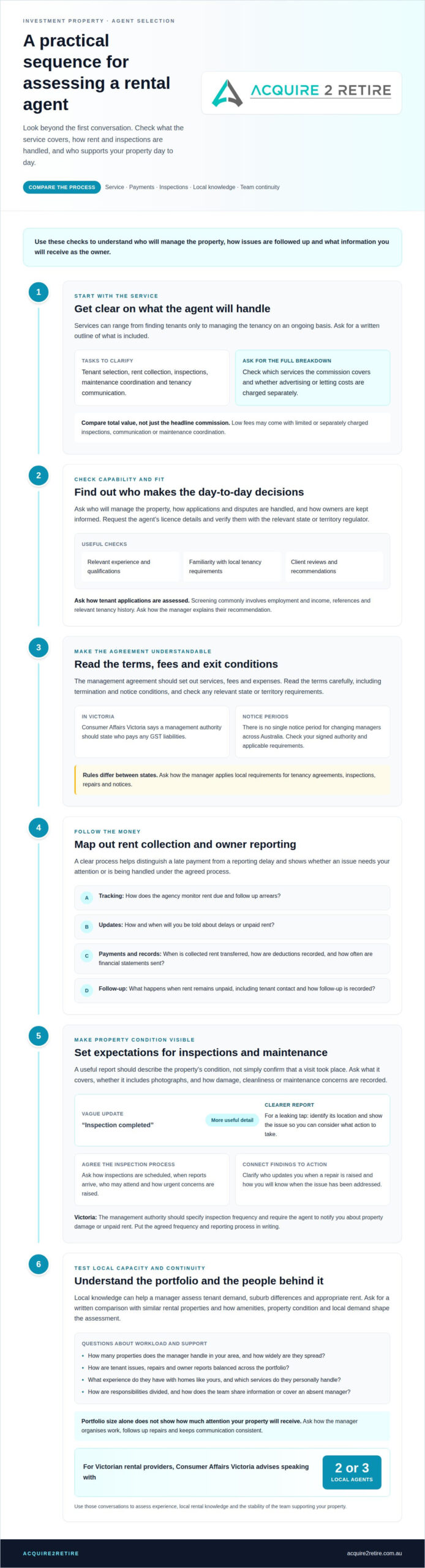
A property manager may handle tenant selection, rent collection, inspections, maintenance coordination and tenancy communication. This can reduce the day-to-day work of managing an investment and give you a professional contact for tenant issues. Services vary: some agents find tenants only, while others manage the tenancy on an ongoing basis. Ask for a written outline of exactly what is included.
Assess the manager’s experience, relevant qualifications and familiarity with local tenancy requirements. Ask who will manage the property day to day, how they handle applications and disputes, and how they keep owners informed. Request the agent’s licence details and verify them with the relevant state or territory regulator. Client reviews and recommendations can also help you assess communication and service quality.
A property management agreement should clearly set out the agent’s services, fees and expenses. In Victoria, Consumer Affairs Victoria says a management authority should also state who pays any GST liabilities. Before signing, read the terms carefully, including which services the commission covers and whether advertising or letting costs are charged separately. Compare the full service and fee breakdown, not just the headline commission.
There is no single notice period for changing managers across Australia. Check the termination and notice terms in your signed management authority, along with any relevant state or territory requirements. Rental laws differ between states, so ask how the manager applies local rules on tenancy agreements, inspections, repairs and notices.
Tenant screening commonly involves assessing an applicant’s employment and income, checking references and reviewing relevant tenancy history. Ask how the manager evaluates applications and explains their recommendation, so you can understand the reasons behind their proposed choice.
Low fees alone can obscure what the service includes. If inspections, communication or maintenance coordination are limited or separately charged, a cheaper commission may not represent better value. Consumer Affairs Victoria advises Victorian rental providers to speak with 2 or 3 local agents; use those conversations to assess experience, local rental knowledge and the stability of the team who will support your property.
2. Asking about rent collection and property inspections
Rent collection involves more than recording payments. Ask how the agency tracks rent due, follows up arrears and tells you about delays. Clarify when collected rent is transferred to you, how deductions are recorded and how often you receive financial statements. A clear process helps you distinguish a late payment from a reporting delay and understand your property’s rental position.
Ask what the manager does when rent remains unpaid, including how they contact the tenant, notify you and record follow-up. Clarify how rent and other property costs appear in owner statements. These details make updates more useful, especially when you need to know whether an issue requires your attention or is being handled under the agreed process.
Inspection reports should give you a practical picture of the property’s condition, not simply confirm that a visit took place. Ask what the report covers, whether it includes photographs and how the manager describes damage, cleanliness or maintenance concerns. For example, a report noting a leaking tap should identify its location and show the issue, helping you decide what action to take.
Ask how routine inspections are scheduled and when the agency sends reports afterwards. Find out whether the same manager conducts inspections or another staff member may attend, and how urgent concerns are raised. In Victoria, the management authority should specify inspection frequency and require the agent to notify you about property damage or unpaid rent. Put the agreed frequency and reporting process in writing.
Use the same discussion to understand how inspection findings connect to maintenance follow-up. Ask who updates you after a repair is raised and how you’ll know when the issue has been addressed. For investors considering how tenancy arrangements fit their wider plans, tenancy coordination and investment planning can help connect day-to-day property decisions with portfolio goals.
3. Experience and local portfolio size
Local knowledge helps a manager assess tenant demand, differences between suburbs and an appropriate rent. Ask how they research the market and request a written comparison with similar rental properties. They should explain how factors such as nearby amenities, property condition and local demand shape their assessment. This gives you a reasoned basis for understanding the proposed rent rather than relying on a broad estimate.
Ask how many properties the manager handles in your area and how widely those properties are spread. Portfolio size and geography can indicate workload and local focus, but the total alone does not show how much attention your property will receive. Ask how the manager balances tenant issues, repairs and owner reports across the portfolio. Their answer should explain how they organise tasks and keep matters moving.
When choosing a rental agent for investment property, ask about their experience with homes like yours and which services the manager personally handles. An apartment, family home and regional rental can involve different tenant expectations and maintenance needs. Find out how the manager uses local knowledge when advising on rent reviews, vacancy risk and maintenance. A practical example can show how they turn market observations into useful guidance.
Experience also includes how the agency supports its property management work. Ask about the principal’s involvement in tenant selection and ongoing management, and how responsibilities are divided. This helps clarify who makes recommendations, follows up repairs and communicates with tenants. Ask how the manager keeps their understanding of local rental conditions current and connects market changes with decisions about your property.
4. Team structure and service continuity
Reliable service depends on more than the manager named in your agreement. Ask who covers your property when that manager is away and how the team shares updates. A collaborative structure allows another team member to respond to a tenant or owner without relying on one person’s memory. Frequent staff changes can interrupt communication and make handovers less consistent.
Ask how the agency records decisions, tenant conversations, maintenance requests and financial matters. Shared notes, for example, should help a colleague see whether a repair has been approved, a tradesperson booked or an owner’s decision is still needed. Find out who checks that follow-up happens and how you’ll receive updates if your usual contact is unavailable.
Team continuity also matters when screening tenants and selecting suitable applicants. Clarify who assesses applications, how employment and income information is considered, and who explains recommendations to you. If different staff members handle these steps, ask how they apply the process consistently and pass relevant details between colleagues. A clear approach helps prevent repeated requests to applicants and conflicting messages to prospective tenants.
Ask how the team handles a change in your assigned manager. Find out who introduces the new contact, transfers property records and explains any open matters. A practical handover should cover the tenancy’s current position, outstanding repairs, upcoming decisions and your communication preferences. The incoming manager should be able to identify a pending maintenance update without asking you to reconstruct the history.
Consider whether the agency’s answers identify real people and clear responsibilities, rather than relying on a general promise of team support. Consistent records, a named backup and a defined handover process are useful signs of continuity. To connect tenancy decisions with your wider property plans, explore investment planning support.
Acquire2Retire
Acquire2Retire helps Australian property investors consider how tenancy decisions fit within a broader investment strategy. If you’re weighing the support you need around an investment property, its Planning & Strategy, Acquisition and Finance services can help connect property decisions with your portfolio goals. Tenancy coordination can also form part of that wider investment journey.
This is a useful next step if you’re planning an acquisition, reviewing your investment direction or considering how a rental property could contribute to a resilient portfolio. It connects property and finance decisions with your longer-term objectives, rather than treating each decision in isolation.
Contact Acquire2Retire to discuss your property investment plans and the support that may suit your next step.
Set your next property decision in context
Choosing a rental agent for an investment property is also a decision about how you want to approach ownership. Before deciding, consider what you want the investment to support over time, how involved you want to be and what would help you feel confident about its direction. These priorities can clarify your next steps, especially if your property plans are changing.
It may also help to consider the rental property alongside your wider financial picture, rather than treating each decision in isolation. If you’re thinking through how property fits your longer-term plans, discuss your property investment plans with Acquire2Retire. A considered approach can help you move forward with greater clarity and confidence.
Frequently Asked Questions
What else should you take into consideration when selecting a property manager?
Ask how the manager handles decisions that need your approval, such as a repair proposal or tenant request. Find out how they present options, record your instructions and follow up. If you own more than one property, ask whether reporting and communication can be organised consistently across them. The manager’s approach should suit the level of involvement you want.
What is the going rate for property management?
There is no standard rate across Australia. Fees depend on the agency, location and services included. Some agencies charge a management commission based on rent, while other costs may apply separately. Compare written fee schedules and check whether leasing, advertising, inspections and tenancy changes are included or charged separately. Compare the full cost with the specific work covered, not just the headline rate.
What questions should you ask?
Ask how the manager handles decisions that need your input, such as a tenant requesting a change to the agreement. Find out how they explain the options, share time-sensitive details and record your instructions. You can also ask what information they need when taking on a property and how they organise the handover of existing tenancy records.
Why should you get a real estate agent to manage your property?
A real estate agent can be useful if managing tenant matters is difficult alongside work, travel or other commitments. If you live away from the rental, a local manager can be the practical contact for tenancy issues and coordinate communication. Self-management may suit an owner with the time and confidence to handle these responsibilities directly.
What services should a rental agent provide for an Australian investment property?
The scope should match the authority you sign and the support you want. Depending on the arrangement, services may include advertising the rental, handling applications, preparing tenancy documents and coordinating the start or end of a tenancy. Clarify whether the agent also manages renewals, tenant notices and exit arrangements, so you know who handles each transition and what remains your responsibility.
How do I compare property management fees and letting fees in Australia?
Compare each agency’s written charges against the same list of tasks. Separate ongoing management from letting costs, then check what each letting charge covers, such as advertising, application processing or preparing tenancy documents. Ask whether extra work is billed separately and how expenses are approved. This like-for-like comparison reveals differences in service scope and helps you assess the overall arrangement without relying on a single fee.