
Buying the property is only the beginning. Knowing what to do after buying an investment property starts with understanding ownership costs, assessing its condition and planning the work needed before tenants move in. Professional support can bring these priorities together in a practical plan.
It’s natural to focus on the purchase, then realise that ongoing expenses, maintenance and finding tenants also need careful attention. A considered plan helps you see how these responsibilities fit together and make informed decisions about the next steps.
This article explains how professional support can help you budget for ownership costs, assess the property, plan maintenance and prepare for tenancy. Strategic guidance can also connect these tasks with your broader investment goals, helping you approach ownership with greater clarity.
Key Takeaways
- Map rental income against regular expenses, vacancy periods and unexpected repairs to understand your property’s cash-flow needs.
- Keep clear records of income and expenses, and consider how deductions, depreciation and capital gains tax may affect your position.
- Use inspection findings to identify priority repairs and maintenance before the property is ready for tenants.
- Plan tenancy preparation around the property’s condition and leasing arrangements, with professional guidance to coordinate the next steps.
I just bought an investment property… now what?
A useful first step in what to do after buying an investment property is to connect its rental prospects with your financial and tax position. Review your rental strategy, understand key risks and organise records ahead of your next tax return.
-
Get professional help researching rental markets and demand
Ask an adviser to assess the location, rental market and tenant demand before settling on a capital-growth or rental-yield strategy. Compare nearby rents, vacancy patterns and property features, and consider how a property manager may assess tenant appeal. For context, an Australian example uses a A$750,000 property earning A$750 a week, or A$39,000 annually: its gross rental yield is 5.2%, while its net yield is 4.3% after stated expenses. Treat this as an illustration, not a forecast. The best fit depends on your goals, borrowing power and purchase costs such as stamp duty.
-
Review investment risks and tax with an adviser
Discuss expected rental income, capital growth and risks that could affect cash flow, including vacancies, repairs and changes to borrowing costs. A growth-focused strategy may prioritise location and long-term value prospects; a rental-yield approach gives more weight to rent relative to purchase price and expenses. In Australia, most investment property expenses can be offset against rental income, including interest on a loan used to buy the property. Rental income affects your tax position, while capital gains tax may apply if the property increases in value before sale. Depreciation claims fall into capital works and plant and equipment categories. Second-hand plant assets generally cannot be claimed, although capital works and new plant assets may still qualify.
-
Get advice on keeping tax and rental income records
Make clear record-keeping part of what to do after buying an investment property. Keep rental statements, loan interest details, invoices and receipts, along with records of acquisition and ownership costs. These documents support income and expense reporting and may help establish the property’s cost base if you sell. Ask an adviser which records relate to repairs, improvements and depreciation, as their tax treatment can differ. A quantity surveyor report may help inform a depreciation claim before you lodge your next tax return. If you’re unsure how tax rules apply to your circumstances, seek professional tax advice.
Budgeting for ownership costs and upfront expenses
Build a cash-flow plan that covers purchase costs, regular expenses, loan repayments and vacant periods. Repayments and interest affect cash flow, while an offset account can reduce the interest charged when its balance is applied to the loan.
-
Get help budgeting for ongoing ownership costs
Ask for a budget that separates predictable bills from irregular costs, and includes periods without rent. Allow for a few weeks without rental income each year or two between tenants. Use these figures to test whether your cash reserves can cover costs when rent stops.
-
Get help estimating property cash flow
Have an adviser model repayments against rental income and expenses, including how interest-rate changes may affect your monthly balance. Ask how the loan structure and offset account affect interest costs, rather than treating rent as money available after repayments alone. Tax advice can clarify how deductible expenses affect after-tax cash flow.
-
Get advice on buying and selling costs
Include upfront costs in the purchase budget, not just the deposit and home loan. Stamp duty is an important purchase cost, and the applicable amount depends on the state or territory. An adviser can also help account for selling costs and tax implications when planning an exit, so projected capital growth or rental yield isn’t assessed in isolation. For structured investment portfolio support, include ongoing costs in the broader plan.
Assessing property age, condition and maintenance needs
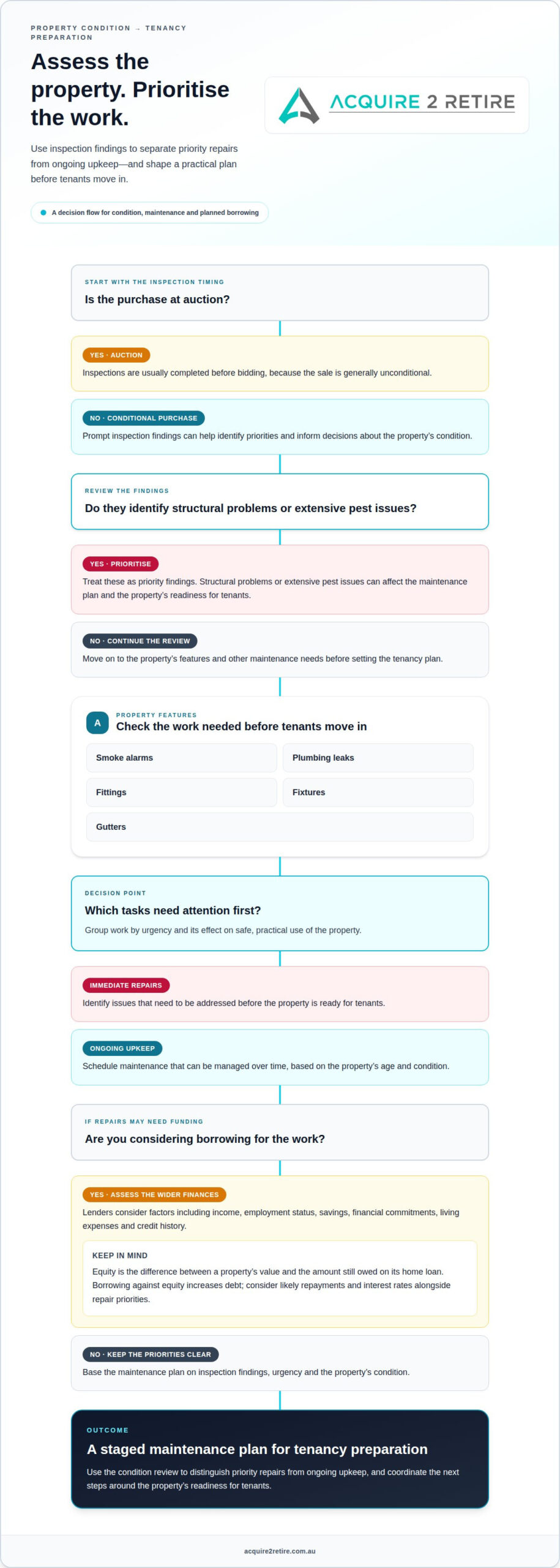
Arrange a focused review of the property’s condition and likely maintenance needs before setting a tenancy plan. A clear assessment helps distinguish urgent defects from work that can be scheduled.
-
Get professional advice on the property’s age and condition
Ask a property adviser to review available building and pest findings, prioritising structural problems or extensive pest issues. These can affect both the maintenance plan and the property’s readiness for tenants. For an auction purchase, inspections are usually completed before bidding because the sale is generally unconditional. For a conditional purchase, prompt inspection findings can help identify priorities and inform decisions about the property’s condition.
-
Get professional advice on property features and maintenance needs
Assess the property’s features against the work needed before tenants move in. Include smoke alarms, plumbing leaks, fittings, fixtures and gutters in the maintenance review, then group tasks by urgency and their effect on safe, practical use. A professional can turn these findings into a staged plan, distinguishing immediate repairs from ongoing upkeep. This helps you understand how the property’s age and condition may affect tenancy preparation.
- Consider how planned borrowing for repairs fits your wider finances. Lenders assess income, employment status, savings, financial commitments, living expenses and credit history when considering additional borrowing. Equity is the difference between a property’s value and the amount still owed on its home loan, but borrowing against it increases debt. Consider likely repayments and interest rates alongside repair priorities, rather than treating available equity as a maintenance budget. A deposit, existing commitments and the property’s condition can all factor into the decision.
Engaging a property manager and finding tenants
After settlement, decide who will handle tenancy tasks and prepare the property for leasing. Owners can manage the property themselves or appoint a property manager.
-
Understand property management responsibilities with professional support
Decide whether to self-manage or use a property manager, then clarify who will handle each responsibility. A property manager may coordinate rent collection, inspections, tenant communication, maintenance and repair requests, and disputes. If you buy a tenanted property, review the existing lease, rent, bond and management arrangements to make the transition orderly. Don’t assume these arrangements transfer without any work; confirm who will communicate with tenants after settlement.
-
Get help addressing landlord obligations and safety requirements
Get guidance on the rental standards and safety requirements that apply in the property’s state or territory. Australian landlord obligations vary across jurisdictions, so use the relevant local requirements to plan for compliance and tenancy readiness. Arrange landlord insurance from the time the purchase contract becomes unconditional, before settlement. For a strata-titled property, the building is usually insured through the body corporate; the landlord policy wording sets out other covered events, exclusions and limits.
-
Get help preparing the property and finding tenants
Plan the property’s preparation around its condition and the work needed before advertising. Pest control, professional cleaning and yard maintenance may be needed, alongside repairs identified earlier. Ask for a preparation budget that itemises each task, so you can see what is driving costs rather than relying on one broad estimate. Tenant-finding arrangements should also clarify how enquiries, inspections and applications will be handled. For support coordinating tenancy planning, discuss your property’s tenancy needs.
Acquire2Retire
Acquire2Retire can help connect the practical steps after purchase with your broader investment plans. Its Planning & Strategy, Finance and Tenancy support can help you consider ownership costs, property condition, cash flow and the path towards finding tenants as parts of one investment decision.
Turn to Acquire2Retire when you want professional guidance to bring these considerations together, or when the property’s next steps need to be aligned with your wider wealth strategy. The right focus will depend on your property, finances and investment goals, rather than a one-size-fits-all approach.
For support planning your next steps, contact Acquire2Retire.
Set your next investment decisions in order
Once immediate ownership tasks are organised, use your next review to connect the property’s day-to-day demands with your longer-term investment direction. Working out what to do after buying an investment property is not a one-off decision. Keep your approach aligned as your finances, priorities and portfolio change.
Acquire2Retire can help bring those decisions into a broader plan through Planning & Strategy, Acquisition and Finance support. This can be useful when you’re considering how the property fits your wealth goals, or weighing up the next stage of your investment journey. The focus is on understanding how the moving parts relate, so your next decisions are made with greater clarity.
If you’re ready to talk through your plans, contact Acquire2Retire to discuss your next steps. A considered plan can help you move forward steadily and make ownership feel more manageable.
Frequently Asked Questions
What professional support is available for the first steps after settlement on an investment property in Australia?
Professional property investment advice can turn post-settlement tasks into a coordinated plan. An adviser can review how the property fits your financial goals, discuss finance and cash flow, and support tenancy coordination as you prepare to lease it. For example, if repairs affect your planned move-in date, align the maintenance timeline with tenant selection and leasing arrangements before advertising.
How can I choose a property manager and compare management fees in Australia?
Compare the responsibilities, communication and costs covered by each proposed management arrangement, rather than looking at the fee alone. Ask how routine inspections, rent collection, tenant communication and repair requests are handled, and whether additional charges apply. Acquire2Retire does not provide ongoing property management; its Tenancy offering coordinates initial tenant selection and leasing arrangements, without taking on day-to-day management duties.
How can a property manager help set the rent and advertise an investment property in my Australian state or territory?
A property manager can consider comparable local rentals, the home’s features and current tenant demand when recommending rent and preparing an advertisement. The listing should accurately describe the property and its condition, while the leasing process needs to follow the rental standards applicable in its state or territory. Acquire2Retire can coordinate initial tenant selection and leasing arrangements, rather than manage the property day to day.
How can an adviser help me claim rental property expenses and depreciation on my Australian tax return?
An adviser can help organise income and expense records and identify questions to discuss with a tax professional. Depreciation may involve capital works and plant and equipment, which have different rules for second-hand assets. Investors generally cannot claim depreciation on second-hand plant assets, while capital works and new plant assets may still qualify. A quantity surveyor report can help inform a depreciation claim.
What risks of owning a rental property should I plan for, including vacancies, repairs and bad tenants?
Plan for gaps between tenancies, unexpected repairs and the time needed for tenant communication or disputes. A vacancy can interrupt rental income while expenses continue, so include that possibility in your cash-flow plan. Careful tenant selection, clear leasing arrangements and prompt attention to maintenance issues can help manage practical risks. Consider how the property’s condition and applicable rental standards affect its readiness to lease.