
A property may look affordable at today’s interest rate but become difficult to hold if repayments rise or rental income pauses. The risks of property investment in Australia also include falling values, unexpected costs and building defects. Assess affordability and complete due diligence alongside considering potential returns.
Interest rates deserve close attention because higher borrowing costs can strain cash flow, especially when rent already falls short of expenses. This guide explains how to stress-test repayments and plan for a cash buffer, while considering how vacancies, market changes and property condition can affect an investment.
Before buying, investigate building condition, insurance, comparable sales and future housing supply. Assess each risk methodically and make decisions that fit your financial capacity, rather than relying on hoped-for growth or current tax settings.
Key Takeaways
- Assess whether realistic rent can cover ongoing ownership costs, including during vacancy, rather than relying on capital growth alone.
- Stress-test repayments against higher interest rates, and weigh the certainty of a fixed rate against the flexibility it may limit.
- Allow for the time and transaction costs involved in selling, so you’re not relying on a quick sale to access cash.
- Before buying, review building and pest findings alongside body corporate records and the sinking fund forecast.
1. What is the biggest risk in property investment?
For a direct property investor, a sustained cash-flow shortfall can be difficult to manage. Rent provides income, while capital growth depends on the property’s value rising; neither offsets ownership costs, loan repayments or vacancy periods. Before buying, consider whether you could keep the property if rent stopped temporarily or your income fell.
Compare realistic market rent with the full cost of ownership, including repayments and ongoing expenses. A rental guarantee is no substitute for evidence of tenant demand or a realistic rent estimate. Review local housing supply, including developments under construction, and recent comparable sales to assess likely market value before making an offer. A vacancy can leave you covering expenses without rent, and unpaid rent can add to the shortfall.
Tenant screening, clear tenancy processes and regular inspections can help manage tenant-related risks. Keep rent records and follow up arrears promptly. Suitable landlord insurance may help cover some property damage, while inspections every six months can help identify maintenance concerns. These steps can reduce exposure, but they do not eliminate the cost of vacancy or missed rent.
Property and shares have different risks and return patterns. A direct property investment ties substantial capital to one asset and may take time and transaction costs to sell. Shares can spread investment across companies but still fluctuate in value. Neither guarantees income or capital growth, so compare liquidity, diversification and your ability to absorb losses.
Tax treatment also affects returns. The May 2026 Federal Budget announced changes to negative gearing and capital gains tax, planned to take effect from 1 July 2027. The proposed negative gearing change would limit the measure to newly built residential properties purchased after 12 May 2026. Proposed capital gains tax changes would replace the potential 50% discount with inflation-based indexation. Don’t base an investment decision solely on current tax treatment; seek qualified tax and financial advice.
Tenancy obligations vary across Australian states and territories, so the applicable rules depend on the property’s location. The relevant jurisdiction’s tenancy framework and the tenancy agreement govern rental conditions, notices, entry and arrears processes.
House prices and rental yields vary between states, cities and suburbs. Local supply, tenant demand, rents and comparable sales all influence performance. Assess the specific location rather than assuming past capital growth will continue.
2. How can investors protect themselves from rising interest rates?
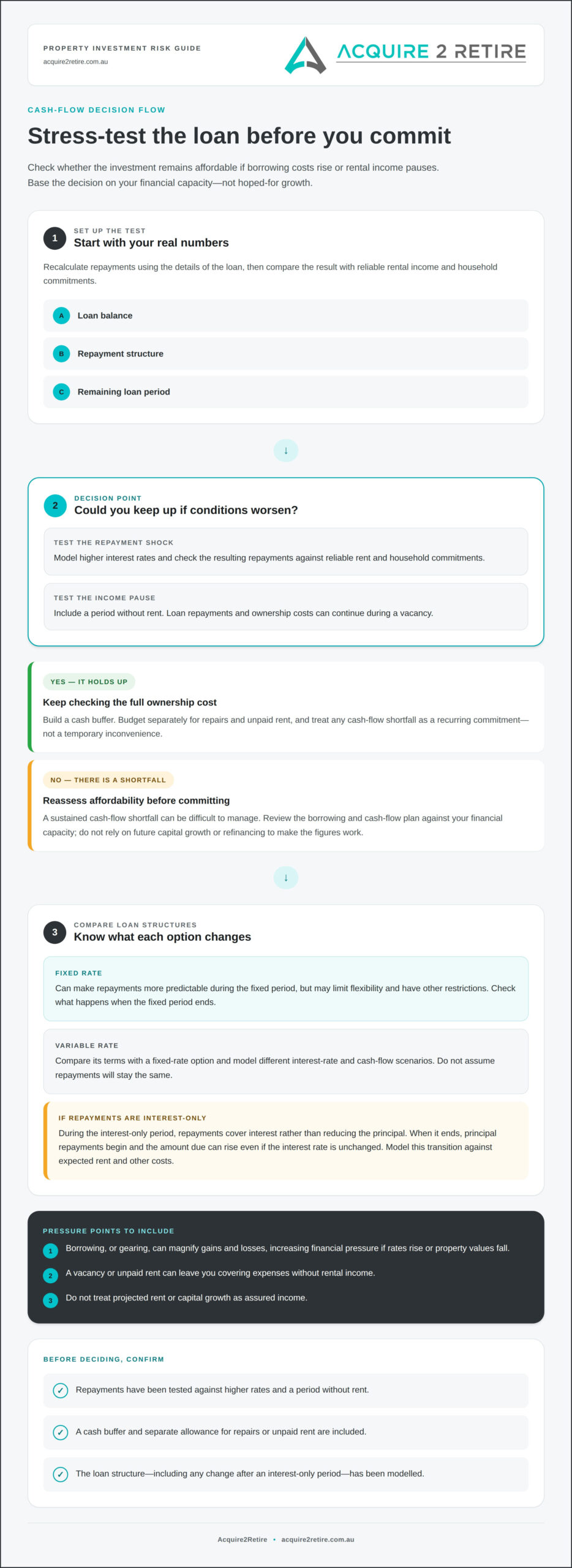
First, test whether the property would remain affordable if interest rates rose. Recalculate repayments using your loan balance, repayment structure and remaining loan period, then compare the result with reliable rental income and household commitments. Include a period without rent in your cash-flow model. This helps show whether you could keep up repayments if rates rose or the property became vacant.
Build a cash buffer before buying another property or increasing your borrowing. Treat any cash-flow shortfall as a recurring commitment, not a temporary inconvenience, and budget separately for repairs or unpaid rent. Borrowing, or gearing, can magnify gains and losses, increasing financial pressure if rates rise or property values fall.
A fixed-rate loan can make repayments more predictable during the fixed period, but may limit flexibility and have other restrictions. Compare its terms with a variable-rate option, including what happens when the fixed period ends. Do not assume repayments will stay the same. Model different interest-rate and cash-flow scenarios before choosing a loan structure.
Interest-only repayments also require careful planning. During the interest-only period, repayments cover interest rather than reducing the principal. When that period ends, principal repayments begin, which can increase the amount due even if the interest rate is unchanged. Model this transition against expected rent and other costs instead of relying on refinancing or future capital growth to make the figures work.
Take care with interstate properties you have not inspected and off-the-plan properties that are not yet built. Distance or an unfinished development can make it harder to assess the property and its rental prospects before committing. Allow for possible delays, changing costs and weaker tenant demand in your cash-flow planning. Do not treat projected rent or capital growth as assured income.
A tailored property finance plan can help bring loan structure, repayment scenarios and investment goals into one considered assessment.
3. What are the main property investment risks?
Property can contribute to long-term wealth, but it is less liquid than cash or listed investments. Average settlement times for Australian property sales are around six weeks, although timing depends on the jurisdiction, contract, purchaser finance and other circumstances. Account for the sale process and transaction costs rather than assuming you can access the property’s value quickly if an unexpected expense arises.
Set aside cash for vacancies, repairs, insurance and other ownership costs. Before a purchase becomes unconditional, investigate insurance costs because high premiums can affect cash flow and resale prospects. Consider how nearby development could change tenant demand or competing supply, then model what might happen if rent falls or the property takes longer to sell. These risks of property investment in Australia can affect cash flow and long-term plans.
Borrowing can tighten liquidity: loan repayments continue when rental income pauses, and falling property values may reduce available equity. Since February 2026, Australian banks have been subject to limits on new lending where a borrower’s debt is six or more times their income. Schemes using equity in a person’s current home can put that home at risk. Assess the effect on both properties before borrowing.
To manage financial, legal and tenancy risks, maintain cash reserves, understand the relevant state or territory tenancy rules, and document lease, maintenance and arrears processes. A manager can coordinate tenancy tasks, while clear records help track rent, costs and obligations. Delegating tasks does not remove an investor’s responsibilities. A written plan can clarify who handles each issue and how it affects the household budget.
Some investment structures carry distinct risks. Land banking involves buying undeveloped land in the hope that its value rises or development approval follows. It can be high risk, with fewer protections than other investments. An Australian timeshare provides use of holiday accommodation for a set period each year, but selling it or recovering money may be difficult. Before committing capital, assess the exit terms and withdrawal rules. Understanding these risks of property investment in Australia can help you judge whether an investment suits your financial circumstances.
4. Building defects and property due diligence
A property’s advertised condition does not tell the whole story. Before buying, arrange a building inspection and use its findings to understand visible defects, maintenance needs and areas that need further investigation. Defects can affect repair planning, rental readiness and the capital available for other investment costs. Consider the report alongside the property’s condition and your plans for it.
After the pre-purchase building inspection, arrange a pest inspection every year. Keep inspection findings with maintenance records so you can track changes and plan repairs before they disrupt a tenancy or contribute to a vacancy. For example, records of a leak that worsens over time can help you address it before it affects the property’s use or requires more extensive work.
For an apartment or townhouse, review body corporate records and the sinking fund forecast before committing. These documents can reveal planned work on common property and indicate whether future spending appears adequately funded. Consider how maintenance could affect levies, cash flow and resale appeal. A low purchase price does not show the full cost of ownership if shared areas need work.
Assess hazards at the individual property level. Flood exposure can vary significantly within the same suburb, so a suburb-wide impression may not reflect the risks at a specific site. Consider how relevant hazards could affect insurance, tenant demand and future sale prospects. Interest rates and personal circumstances also influence how much room you have in your budget for repairs or disruption.
Use a clear sequence: review inspection findings, examine body corporate records where relevant, assess local hazards, then compare the purchase with likely ownership demands. This connects the property’s condition to its financial role in your plans, rather than judging the investment by its appearance or projected growth alone.
To bring property condition and acquisition decisions into a considered investment plan, plan your property investment.
Acquire2Retire
Acquire2Retire helps investors bring property risks into a considered investment plan, from assessing borrowing capacity and purchase decisions to planning for tenancy needs. Its Planning & Strategy, Acquisition, Finance and Tenancy support can help connect due diligence, cash-flow considerations and portfolio goals before you commit to a property or review your next step.
This guidance may be useful if rising repayments, building concerns or uncertainty about rental demand are making an investment decision harder to assess. A clear view of your circumstances and objectives can help shape a more resilient approach to property investment.
Contact Acquire2Retire to discuss your property investment plans.
Make your next property decision with a clear plan
A sound investment decision starts with your circumstances, not a prediction about the market. Define what you need the property to achieve, how much financial flexibility you want to retain and which trade-offs you are prepared to accept. This gives you a practical framework for weighing the risks of property investment in Australia against your longer-term goals.
If you’re considering a purchase or reviewing your investment direction, Acquire2Retire can help you shape a plan through Planning & Strategy, Acquisition and Finance. The next step is a conversation about your objectives and the decisions ahead, so you can approach your property strategy with greater clarity.
Contact Acquire2Retire to discuss your plans, and take your next step with care and confidence.
Frequently Asked Questions
How can investors protect themselves from rising interest rates?
Protect your borrowing capacity by assessing how higher repayments across all your loans could affect your finances, not just the mortgage on one property. For example, if you own several investments, consider whether rent from one could help cover costs on another during a vacancy. Review loan terms before committing, and avoid relying on refinancing as your only way to manage future repayment pressure.
What are the main property investment risks?
Key risks include earning less rent than expected, unexpected costs, property damage and changes in value. These pressures can overlap: a repair may coincide with a vacancy while mortgage repayments continue. Consider the effect on your wider finances, including other debts and regular commitments, rather than assessing the investment in isolation.
What is the biggest risk in property investment?
The greatest risk depends on your ability to absorb setbacks, but losing the ability to hold a property can turn a temporary problem into a forced sale. Before committing, identify what could put pressure on your budget, such as reduced employment income or several unexpected bills. Decide in advance what financial changes would prompt you to reassess the investment.
What are the main risks of investing in Australian residential property?
Australian residential property risks can include weak tenant demand, property damage, difficult-to-sell assets and schemes promoted with undisclosed interests. Be cautious if a promoter avoids questions, downplays costs or presents capital growth claims without independent support. Before joining a property scheme, understand who benefits from the transaction and what rights or protections apply to your investment.
How do interest rate rises affect Australian property investors and mortgage repayments?
When a loan’s interest rate rises, more of each repayment may go towards interest, leaving less to reduce the principal. The effect depends on the loan balance, repayment structure and rate terms. After a rate change, ask your lender for an updated repayment schedule and compare the revised amount with expected rental income and your other financial commitments.
What are the costs of buying and owning an investment property in Australia, including stamp duty, land tax and maintenance?
Allow for purchase costs such as stamp duty and ongoing expenses such as land tax, insurance, repairs and maintenance. Stamp duty and land tax depend on the property’s location and applicable state or territory rules. Maintenance costs depend on the property’s condition and upkeep needs. Include these items in your cash-flow assessment alongside loan repayments and periods without rent.