
A sound tenancy decision depends on more than first impressions. Knowing how to find a good tenant for an investment property means reviewing a complete application, verifying rental and income details, and considering whether the home suits the applicant’s needs. Use consistent criteria and evidence, rather than instinct alone.
It’s natural to prioritise reliable rent and a well-cared-for property, while also considering the time you can devote to managing the tenancy. This article covers what to check when screening applicants, how to weigh self-management against property management, and how clear expectations can support respectful property care. It also explains how matching a home’s features to tenant priorities can help you make a considered decision for the property and your investment plans.
Key Takeaways
- Start with a complete application, then assess references and supporting information against consistent, relevant criteria.
- Weigh the time and attention self-management requires against the support a property manager can provide with applicant screening and tenancy coordination.
- Look for respectful care, clear communication and timely maintenance reporting, while setting expectations about changes to the property.
- Consider which features suit renters in your property’s location, so tenant priorities and your investment plans are better aligned.
1. What are the critical items for the renter selection checklist?
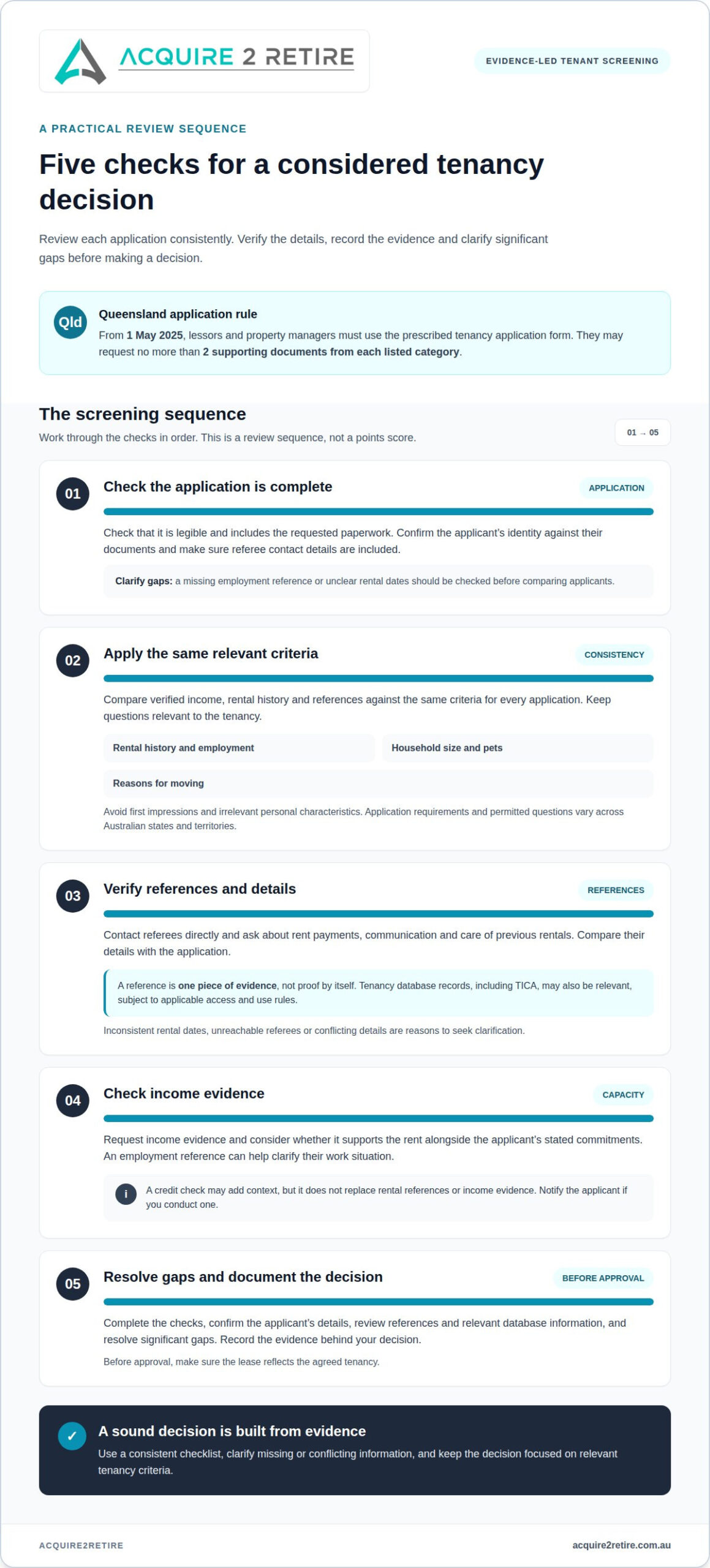
Begin by checking that each application is complete, legible and supported by the requested paperwork. Confirm the applicant’s identity against their documents, and make sure referees’ contact details are included. A missing employment reference or unclear rental dates calls for clarification before comparing applicants. In Queensland, from 1 May 2025, lessors and property managers must use the prescribed tenancy application form. They may request no more than 2 supporting documents from each listed category.
Assess every application against the same relevant criteria, such as verified income, rental history and references. Record the evidence for your decision, and avoid relying on first impressions or irrelevant personal characteristics. Ask about rental history, employment, household size, pets and reasons for moving. Keep questions relevant to the tenancy. Application requirements and permitted questions vary across Australian states and territories, so follow the rules where the property is located.
Contact references directly and ask about rent payments, communication and care of previous rentals. Compare the referee’s details with the application, and treat a reference as one piece of evidence, not proof by itself. Tenancy database records, including TICA, may also provide relevant information, subject to applicable access and use rules. Inconsistent rental dates, unreachable referees or conflicting details are reasons to seek clarification.
Request income evidence and consider whether it supports the rent alongside the applicant’s stated commitments. An employment reference can clarify their work situation. A credit check may add context, but it should not replace rental references or income evidence. If you conduct a credit check, notify the applicant.
Before approving an application, complete the checks, document your decision and make sure the lease reflects the agreed tenancy. Confirm the applicant’s details, review references and relevant database information, and resolve significant gaps first. A consistent checklist helps you identify concerns such as incomplete paperwork, unverifiable claims or negative tenancy history, while keeping the decision focused on evidence and lease requirements.
2. Self-management versus hiring a property manager
Self-management gives you direct control over applications, inspections, renter communication and repair decisions. It also requires time for each task, organised records and a plan for responding to tenancy issues. If you live far from the property, arranging an inspection or urgent repair may take extra coordination.
A property manager can screen applicants, contact references and share observations from inspections. This support may be useful when you’re reviewing several applications or don’t have time to follow up each referee. Ask how the manager assesses applicants, communicates recommendations and keeps you informed, so the final decision remains consistent with your investment priorities.
Consider maintenance coordination as well as tenant selection. A property manager may have a network of tradespeople to help arrange emergency repairs. If you manage the property yourself, you’ll need to organise suitable trades and follow up on the work. Either way, establish a clear process: renters need to know how to report a problem, and owners need to know how decisions and repairs will be handled.
How much do Australian property managers charge for tenant screening and letting? There’s no single fee across Australia. Charges depend on location and the letting support provided. Compare what each quoted fee covers, including applicant checks and the steps involved in securing a tenancy.
Choose self-management if you can give the process consistent attention and are comfortable coordinating tenancy tasks. A property manager may suit owners who prefer support with screening, references and repair coordination. For a broader approach to tenancy coordination, connect the renter decision with your investment plan and ongoing support needs.
3. Assessing property care and maintenance habits
Judge property care by clear expectations and ongoing communication, not assumptions about an applicant’s lifestyle. Explain how to report maintenance, and ask references whether the renter raised issues promptly at previous homes. Early reporting of a leaking tap, for example, can help prevent further damage or a minor repair becoming more extensive. Treat this as one useful indicator alongside the application and rental history.
Set practical expectations before the tenancy begins. Discuss pets, garden upkeep and changes to the interior so the renter understands what requires agreement. Painting a wall or mounting a shelf can alter the property, so tenants should seek permission before making changes. Clear conversations at the outset help both parties understand what taking care of that particular home involves.
Use a maintenance plan to track routine upkeep and address small problems before they grow. Record reported issues, arrange appropriate repairs and note any follow-up. When a tenant reports a repair promptly, the landlord has a clearer opportunity to respond. This shared process supports the property’s condition without expecting renters to carry out repairs themselves.
Plan to inspect the rental in person at least once every six months, and at minimum annually. Note visible wear, maintenance needs and changes that may need discussion, rather than treating the visit as a search for faults. Keep the conversation constructive: a tenant might point out an issue you haven’t noticed, such as a slow drain or damaged garden tap. Prompt attention and clear communication can help preserve the home and support a stable tenancy.
4. Matching property features to tenant priorities
A property that suits one renter may feel impractical to another, so consider its features in the context of the local rental market. Renters in inner-city areas may value off-street parking, while people considering a large suburban family home may prioritise secure fencing. These examples show why property fit depends on location and layout, not simply the number of rooms.
Start with a simple feature-to-priority assessment. List what the property offers, then consider which renters are most likely to value those features. For an inner-city home, assess whether off-street parking is available and how prominently to mention it in the listing. For a family-sized suburban house, describe the fencing clearly, since secure outdoor space may matter to prospective tenants.
Look for gaps between the home’s features and the priorities of likely applicants. A house without a garage, for example, might benefit from a carport, which could improve tenant appeal and rental returns. Weigh that option against the property’s overall investment plan before committing to an improvement. Any upgrade should address a genuine fit issue, not just copy what is common elsewhere.
Use inspection feedback and applicant questions to understand what matters to people considering this particular property. If several applicants ask about parking, fencing or outdoor areas, those questions can signal how they assess the home. They don’t prove that every future renter will have the same priorities, but they can help you decide what to highlight and whether a practical upgrade makes sense.
Assess the property from a renter’s perspective, then weigh its appeal against your investment priorities. A thoughtful match can help attract suitable applicants and support a tenancy that works for both the household and the property. Ground your decision in the home’s location, features and likely renter needs.
Acquire2Retire
Acquire2Retire helps Australian property investors connect tenant decisions with their broader portfolio plans. If you’re weighing an applicant’s fit against the property’s priorities, its Planning & Strategy and Tenancy offerings can help bring those considerations into a clearer investment framework. Acquisition, Finance and ongoing support also help investors consider how each property decision relates to their wider wealth strategy.
This guidance may be useful when you’re assessing a rental opportunity, reviewing your investment direction or considering how tenancy decisions fit your plans. For a considered discussion of your property investment goals, contact Acquire2Retire.
Take your next investment step with confidence
Choosing a tenant is part of a wider investment journey, shaped by the property, your objectives and the role it plays in your portfolio. A considered approach to how to find a good tenant for an investment property can start with a broader question: how should this tenancy support your plans for the asset?
Acquire2Retire brings property investment Planning & Strategy, Acquisition and Finance into that wider conversation, helping connect individual choices with your portfolio direction. If you’re ready to consider how your next tenancy decision fits your investment goals, start a conversation with Acquire2Retire.
Once you’re clear on your priorities, you can make considered decisions that align with your longer-term plans.
Frequently Asked Questions
What are the critical items for the renter selection checklist?
A useful checklist covers identity, a complete application, income evidence, rental history, references and relevant tenancy database information. Include space to record what you verified and when, so an application with missing details isn’t treated as equivalent to one that has been fully checked. Apply the same criteria to every applicant and focus the decision on information relevant to the tenancy.
What makes a good renter?
A suitable renter is likely to meet the lease obligations, communicate clearly and treat the property respectfully. Consistent application details, positive tenancy references and a clear explanation of how they’ll use the home are practical indicators to consider. To find a good tenant for an investment property, weigh these indicators together rather than treating one favourable impression as decisive.
When should you stop looking and decide on a renter?
Decide whether an applicant meets your consistent criteria, and weigh the cost of continued searching against the pressure of lost rental income. Compare the available applications with the effect of continued vacancy on your financial position. If the property has been vacant longer than you can comfortably afford, choosing the strongest applicant who meets your requirements may be more prudent than waiting indefinitely.
Why can it be hard to find a good tenant?
Finding a suitable renter can take time because an applicant’s presentation alone may not provide enough evidence of reliability or property fit. References can be hard to reach, rental histories may need clarification, and a home’s features won’t suit every household. Parking may matter more to one applicant, for instance, while another prioritises secure outdoor space.
What checks should Australian landlords do when screening prospective tenants?
Verify the applicant’s identity and supporting documents, review rental history, contact referees and assess income evidence. Ask every applicant consistent, tenancy-related questions about employment, household size, pets and reasons for moving. Consider relevant tenancy database information as part of the overall assessment, and follow the rules for the property’s state or territory, particularly when requesting documents or using screening information.
How can landlords verify a tenant’s income, employment and rental history?
Compare income documents with the applicant’s stated employment and rent commitments, then use an employment reference to clarify their work situation. Where possible, contact previous rental references using independently verified details, and ask about payment history, communication and care of the property. If dates, income details or referee accounts conflict, seek clarification and weigh the explanation alongside the other evidence before deciding.