
What if finding a tenant is only one part of getting your investment property ready? A considered investment property leasing setup brings together property readiness, tenancy arrangements and clear responsibilities, so the first handover fits into your wider investment plan.
It’s understandable to feel unsure about what needs to happen first, particularly when tenancy rules differ across Australian states and territories. You’ll need to prepare the property, make informed leasing decisions and decide who will handle each task. It also helps to distinguish initial tenant placement from ongoing property management.
This guide sets out a practical path from preparing the property to handing it over. It compares self-management, ongoing property management and coordinating the initial tenancy separately, and explains how leasing decisions can fit with your objectives and cash-flow requirements.
Acquire2Retire coordinates initial tenant selection and leasing arrangements as part of the broader investment journey. The handover should also make clear who will handle ongoing tenancy responsibilities.
Key Takeaways
- A staged investment property leasing setup helps you organise property preparation, tenancy arrangements and handover in a clear sequence.
- Consider rental assumptions alongside your cash-flow needs, risk profile and longer-term ownership objectives.
- Self-management, ongoing property management and initial tenancy coordination involve different levels of investor involvement and responsibility.
- Use a practical preparation checklist, then account for tenancy requirements that vary between Australian states and territories.
- Acquire2Retire coordinates initial tenant selection and leasing arrangements as part of a broader investment journey, with ongoing responsibilities clearly assigned.
Investment property leasing setup: what needs to be ready before a tenant moves in?
A first tenancy is easier to organise when the work is broken into stages. Consider the property, proposed tenancy, responsibilities and handover together, then confirm what must be completed before occupation.
An investment property leasing setup is the one-off preparation and coordination of a rental property, tenancy arrangements, task responsibilities and tenant handover before occupation. It creates a clear starting point, but it doesn’t guarantee a particular rent, tenant or investment return, and it doesn’t remove the owner’s ongoing responsibilities.
What does an initial leasing setup include?
Initial setup brings several decisions into sequence. The property needs to be ready to occupy, the intended rental approach needs consideration, and the tenancy arrangements and tenant selection need coordination before keys are handed over. A documented handover gives the parties a record of the property’s starting condition and the arrangements in place.
It’s useful to distinguish this initial work from recurring property management. Rent collection, maintenance coordination and tenant communication continue after the tenancy begins. Property management describes the broader field of responsibilities associated with overseeing property. For an investor, the practical question is which tasks are covered during setup and who is responsible afterwards.
Write down who handles each task and when. Identify who prepares the property, coordinates tenant selection, finalises the required tenancy documents and completes the handover. Then record who will respond to routine matters once the tenancy is underway. This reduces the chance of an important task being assumed rather than assigned.
- Property readiness: assess condition, cleanliness, access and any work needed before occupation.
- Rental approach: consider likely tenant demand and the rent assumption alongside your ownership plans.
- Tenancy and handover: coordinate tenant selection, agreed terms, required records and the transfer of keys and relevant information.
Tenancy rules differ between Australian states and territories, including requirements relating to documents, bonds, safety and processes. Treat the list above as a planning framework, not a universal legal checklist. Confirm the requirements that apply to the property through the relevant tenancy authority.
How should investors define the purpose of the tenancy?
Start with your expected holding period and cash-flow needs. An investor planning to retain a property over the longer term may weigh continuity and predictable ownership costs differently from someone whose plans could change sooner. These considerations can inform the tenancy approach, but they don’t determine a suitable arrangement on their own.
A rental estimate is an input to planning, not a promise of income. Allow for rent, vacancy periods and property expenses to differ from assumptions, and consider how that could affect loan commitments and other portfolio priorities. This makes leasing part of the investment plan, rather than a separate exercise focused only on the advertised rent.
For a wider view of how holding period, risk, cash flow and long-term targets fit together, explore property investment planning in Australia. Once the purpose of the tenancy is clear, decide how much initial coordination and ongoing work you’ll take on yourself.
How leasing decisions connect to investment strategy and property readiness
Leasing readiness begins before advertising. The property’s condition, the tenants it may suit and any work needed to prepare it can affect the timing and approach to a first tenancy. Connecting these choices to acquisition and finance planning helps you assess the whole ownership commitment, rather than treating expected rent as a stand-alone figure.
Rental assumptions belong in investment planning before leasing begins because they influence cash-flow expectations, preparation decisions and the level of risk an investor is prepared to carry. They’re planning inputs, not promises: actual rent, occupancy and costs may differ from estimates.
Which property and rental assumptions should shape the setup?
Start with what you can observe. Review the property’s condition, layout, access and features, then consider which tenant profile it may suit and whether preparation work could affect readiness or timing. Likely tenant demand can help shape presentation and the leasing approach, but it isn’t proof that a particular rent or occupancy period will be achieved.
Keep evidence and assumptions separate. Comparable advertised properties and available market information may help inform a rental estimate, while the time a property could be vacant remains an assumption to test. Compare the estimate with your cash-flow requirements, allowing for ownership costs and possible rent gaps. If the numbers depend on uninterrupted rent or no preparation work, revisit the plan before committing to a leasing timeline.
How do acquisition and finance decisions affect leasing readiness?
Due diligence can surface condition or maintenance issues that may need attention before a tenant moves in. These findings can affect the preparation required and the timing of the first tenancy. Considering them during acquisition planning gives you a clearer view of the steps between purchase and leasing, rather than discovering that the property needs further work when you’re ready to find a tenant.
Acquisition strategy connects property research and due diligence with the intended investment purpose. A property that needs work before occupation, for example, may require a different readiness timeline from one that is already suitable for leasing. Consider the acquisition strategy alongside anticipated preparation and holding costs.
Finance planning matters too. Consider how setup requirements, possible delays and rent assumptions fit with loan commitments and available cash flow. This isn’t a substitute for personal financial advice. It’s a way to identify the assumptions to include in your broader plan. Acquire2Retire’s investment planning and finance support can bring these considerations together with your objectives, risk profile and longer-term targets. Explore a considered investment planning approach as you map out the property’s path from acquisition to its first tenancy.
Self-managing, appointing a property manager or coordinating initial leasing?
These arrangements can look similar before a tenant moves in, but they differ in what happens after the lease begins. The right fit depends on how involved you want to be, the time you can set aside and whether you want support for initial tenant placement, ongoing management or both. No option suits every investor.
The comparison below outlines common differences. The exact tasks covered by a property manager or leasing coordinator depend on the agreed scope, so clarify responsibilities and the handover point before the tenancy starts.
| Arrangement | Task scope | Investor involvement | Continuity and ongoing responsibility |
|---|---|---|---|
| Self-management | The owner coordinates tenant selection, leasing arrangements and subsequent tenancy tasks. | High. The owner handles communications, records and coordination directly. | The owner continues managing the tenancy and meeting applicable responsibilities. |
| Full-service property management | An ongoing management arrangement, with tasks set out in the management agreement. | Less day-to-day coordination, while the investor retains ownership decisions and responsibilities. | Management continues under the agreed arrangement; responsibilities should be clearly understood. |
| Initial tenancy coordination | Support with initial tenant selection and leasing arrangements. | Involved in decisions and the transition, with ongoing tasks assigned separately. | Coordination ends at the agreed handover; ongoing management remains with the owner or a separately appointed manager. |
An investment property leasing setup can cover the first tenancy without covering the ongoing work that follows. Initial coordination doesn’t transfer the landlord’s responsibilities or automatically create a continuing management arrangement. Before proceeding, make the scope tangible: note who is responsible for each task, what records or information will be handed over, and who becomes the tenant’s contact after commencement.
When might self-management suit an investor?
Self-management places day-to-day coordination with you. You’ll need time for tenant communications, tenancy records, maintenance arrangements and relevant obligations throughout the tenancy. It may suit an investor who wants direct involvement and can manage these tasks consistently, but availability matters: property issues and communications don’t always arrive at a convenient time. Processes must also reflect the rules in the property’s state or territory.
What is the difference between a property manager and leasing coordination?
A property manager is part of an ongoing management arrangement, not simply someone who finds a tenant. Initial leasing coordination supports tenant selection and the arrangements that establish the tenancy, then hands over with responsibilities clearly assigned. Define what is covered, when coordination ends and who will manage rent, maintenance and tenant communication afterwards. A clear boundary helps avoid gaps as the tenancy moves from setup into ongoing ownership.
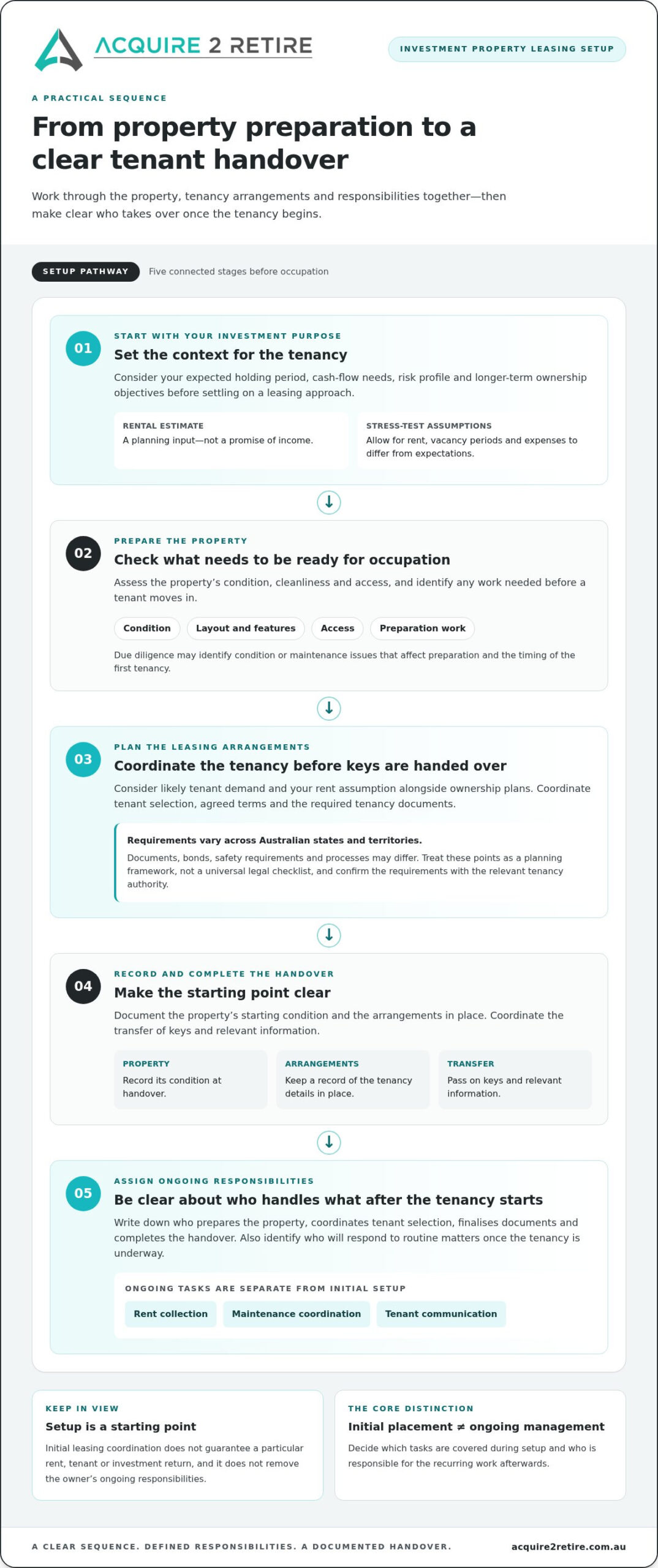
Investment property leasing setup checklist: prepare, agree and hand over
A clear sequence turns preparation into a tenancy that’s ready to commence, with fewer unanswered questions about who does what. Use this checklist as a practical framework, then verify jurisdiction-specific requirements separately. Tenancy documents, bond processes and disclosure obligations can differ across Australian states and territories.
What should be prepared before marketing the property?
Before advertising, review the property’s condition, presentation and access arrangements, and identify any work that could affect readiness or timing. Gather accurate property information and decide how enquiries and prospective tenants will be handled, so communication is consistent. Check the relevant state or territory authority’s current guidance for requirements that apply to the property and proposed tenancy.
- Review the property. Walk through each area, note its condition and presentation, and identify repairs or preparation to complete before occupation. Consider how access will be arranged for viewings and handover.
- Organise property information. Bring together details prospective tenants may need, along with records relevant to the property. Keep information accurate and decide how enquiries will be received, answered and recorded.
- Confirm the leasing approach. Set out the proposed rent and tenancy terms for consideration, and establish a consistent process for assessing prospective tenants. Treat estimates as planning assumptions, not a commitment to a particular outcome.
- Verify local requirements. Before finalising documents or collecting a bond, consult current official guidance for the property’s state or territory. Check which forms, disclosures, timeframes and bond-handling processes apply rather than relying on a general national checklist.
- Agree the handover. Record the tenancy start date, key dates, agreed contacts and the point at which initial coordination ends and ongoing responsibilities begin.
What should a clear tenancy handover record?
A useful handover record brings the practical details into one place, so the tenant and the person responsible for ongoing coordination know how the tenancy is starting. Include relevant condition information and access details, and make sure the communication arrangements identify who handles future enquiries and property matters.
- The tenancy commencement date and any other agreed key dates.
- Relevant tenancy documents and property condition information.
- Contact details for the tenant and the person responsible for ongoing communication.
- Access arrangements, key information and responsibility for follow-up tasks.
Bond handling, tenancy documentation and required disclosures vary by jurisdiction, so verify the current process with the relevant official state or territory source before the tenancy begins. Keep a copy of the completed handover record with the property’s tenancy information. It provides a practical reference if responsibilities or arrangements need to be revisited.
Acquire2Retire coordinates initial tenant selection and leasing arrangements as part of your broader investment plan. Read more about Acquire2Retire’s investment support.
How Acquire2Retire supports an investment property leasing setup
Tenancy setup is most useful when it fits the investment plan rather than sitting apart from it. Acquire2Retire supports investors across planning, acquisition, finance, initial tenant selection and leasing coordination, with ongoing portfolio advice to help keep decisions connected to longer-term objectives. The focus is on establishing initial leasing arrangements with responsibilities understood, not promising a particular tenant, rent, timeframe or investment result.
How does tenancy coordination fit into the wider investment journey?
The intended tenancy can be considered alongside your goals, risk profile and cash-flow requirements. These shape the assumptions used in planning, while property research and due diligence can inform what may need to happen before a property is ready for its first tenant. Finance support can also consider lending strategy in the context of wider portfolio objectives, so preparation and leasing plans are considered as part of the ownership picture.
Acquire2Retire coordinates initial tenant selection and leasing arrangements in relation to your investment objectives. This creates a defined step between acquiring a property and beginning the tenancy. It also distinguishes initial coordination from the recurring work that follows, so you can plan for both rather than assuming the first arrangement covers every future task.
There’s no single leasing approach that suits every investment. Your expected holding period, available time and appetite for direct involvement can all influence how initial arrangements are coordinated and who takes responsibility afterwards. Ongoing portfolio support provides a way to review how the property fits your broader strategy as circumstances and objectives develop.
What happens after the initial leasing arrangements?
The transition should be clear before the tenancy begins. Initial leasing coordination establishes the first arrangements. After that, ongoing rent collection, maintenance coordination and tenant communication sit with the owner or a separately appointed property manager. Agreeing this handover point helps avoid uncertainty about who responds to future matters.
Acquire2Retire’s role is to coordinate initial tenant selection and leasing arrangements, with the boundary between setup and ongoing management clearly defined. Tenancy requirements can vary between Australian states and territories, so investors should verify applicable processes through the relevant official authority.
A considered setup brings together an agreed leasing plan, organised records and named responsibilities. That structure can support an orderly transition from acquisition to tenancy, while keeping rental assumptions connected to cash flow and investment objectives. It won’t remove the uncertainties of ownership, but it can make decisions and the handover easier to understand.
If you’re considering a first tenancy, discuss a tailored property investment strategy with Acquire2Retire and how initial leasing arrangements may fit your plans.
Set your first tenancy up with a plan for what comes next
Before moving from preparation to tenant selection, check that your leasing assumptions still fit the way you intend to hold the property. The first tenancy is not an isolated milestone; it can shape how you plan cash flow, manage risk and make later portfolio decisions. A well-considered investment property leasing setup gives those decisions a clear starting point without suggesting that rental outcomes are certain.
Acquire2Retire brings tenancy planning into the wider investment conversation, alongside property strategy, acquisition and finance support. Its tenancy coordination includes initial tenant selection and leasing arrangements shaped around your objectives and cash-flow needs. Ongoing portfolio advice can help you revisit the strategy as your plans evolve.
If you’re ready to consider how the first tenancy fits your investment goals, discuss your property investment plans with Acquire2Retire. A considered next step can help you move forward with greater clarity.
Frequently Asked Questions
How long does it take to set up an investment property for lease?
There’s no reliable universal timeframe because the work depends on the property’s condition, preparation needs, tenant demand and applicable state or territory processes. A property needing repairs or extra documentation may take longer to prepare than one that’s ready for occupation. Build a schedule with time to gather information, consider prospective tenants and complete tenancy arrangements. Avoid confirming a move-in date until those steps are addressed.
Can I lease my investment property without a property manager?
Yes, you can choose to manage the tenancy yourself, provided you’re prepared to take on the associated tasks and responsibilities. You’ll need a process for responding to tenant messages, keeping records and coordinating maintenance, as well as staying across relevant tenancy obligations. Consider whether you can manage these tasks consistently alongside work and other commitments. Requirements vary across Australia, so use guidance for the property’s state or territory.
What is the difference between tenant placement and property management?
Tenant placement and initial leasing coordination focus on starting a tenancy, while property management is an ongoing arrangement that continues after the tenant moves in. Coordinating the initial selection and leasing arrangements doesn’t automatically assign someone to handle a later maintenance request or tenant query. Before the tenancy starts, write down who takes over after the initial work, how they’ll receive relevant records and where future communications should go.
Do tenancy rules differ between Australian states and territories?
Yes, tenancy processes and requirements depend on the property’s jurisdiction, so don’t assume that a form or procedure used for one property applies to another. This can matter if you own rentals in different states or territories, as documents, bond processes and disclosure requirements may differ. Before advertising or finalising arrangements, consult the current official tenancy guidance for the property’s location and use the applicable forms and processes.
Should I set the rent before or after preparing the property?
Develop an initial rental estimate as part of planning, then review it against the property’s condition and available evidence for comparable rentals before settling on an approach. A property needing work, for example, may not present in the same way as comparable homes that are ready to occupy. Keep observed market information distinct from assumptions about rent or vacancy, and consider how the estimate fits your cash-flow plan without treating it as guaranteed income.
Does renting out an investment property automatically mean I am running a rental business?
No, renting out a property doesn’t automatically establish that you’re carrying on a rental property business for tax purposes. The Australian Taxation Office considers the circumstances of the rental activity, so don’t base a tax decision on a single tenancy or your level of involvement alone. Consult current ATO guidance for general information and seek advice suited to your circumstances before deciding how to report rental income or claim expenses.